How to Brief a Branding Agency in Riyadh: A 12-Question Checklist
An enterprise brand brief is often misunderstood as an invitation to a creative brainstorming session, but it needs to be understood as what it is; an operational document. When a Chief Marketing Officer in Saudi Arabia issues a vague brief built on generic ambitions, the agency delivers generic concepts. The cost of a poorly structured procurement process is measured in months of wasted revisions, misaligned design systems, and friction with institutional stakeholders.
To secure an agency partner capable of handling bilingual enterprise complexity, constructing a precise branding agency brief in Saudi Arabia requires absolute clarity from day one. It must outline the regulatory, technical, and strategic boundaries within which your visual identity must operate.
Setting the Institutional Parameters
Every enterprise brand transformation in Riyadh takes place against a backdrop of national digital modernization and regulatory oversight. If an agency does not understand the technical constraints of the Personal Data Protection Law (PDPL) or the compliance timelines of Tadawul, their creative concepts will fail the implementation test. A comprehensive branding agency brief in Saudi Arabia must establish these parameters before any design work begins.
The document should explicitly state how the brand identity supports the organization's three-year commercial roadmap. If the business intends to expand into new regional markets, launch a digital-first product line, or undergo an initial public offering, the brand system must be architected to absorb those shifts without requiring a structural overhaul. When executing this layer of the brief, teams often consult our dedicated brand experience design services to map out technical platform requirements in advance.
A brand guideline tells people what the logo looks like. A brand system tells the entire organization how to think and communicate.
The 12-Question Enterprise Briefing Checklist
Before distributing a request for proposal to external agency partners, complete this framework to ensure your internal parameters are defined.
01. Strategic Trigger
What is the specific commercial trigger for this brand transformation right now?
02. Regulatory Governance
Which specific regulatory mandates (e.g., Tadawul, CMA, PDPL) govern our corporate communications?
03. Decision Architecture
Who are the primary executive decision-makers, and what are their non-negotiable strategic priorities?
04. Growth Roadmap
What are the concrete business objectives this brand system must support over the next three to five years?
05. Bilingual Parity
How will the brand handle simultaneous bilingual application across right-to-left and left-to-right digital interfaces?
06. Technical Integration
What specific legacy enterprise platforms must this new design system integrate with immediately?
07. Market Positioning
Are we refreshing an existing market narrative or introducing an entirely new institutional position?
08. Audience Profile
What is the precise target audience profile (e.g., regional enterprise consumers, international fund managers)?
09. Operational Gaps
What specific internal resource gaps exist within our team for managing a tokenized design system?
10. Legal Constraints
What are the strict legal and copyright parameters for our corporate typography and naming conventions?
11. Rollout Milestones
What is the exact operational timeline for rollout, including key board meetings and regulatory filings?
12. Performance Metrics
How will we measure the systemic success of this deployment past simple aesthetic approval?
If your marketing leadership team cannot answer all twelve questions with quantitative or specific strategic data, your branding agency brief would be left incomplete. Distributing it to agencies in its current state will yield fragmented proposals.
The Pitfalls of Uncapped Strategic Scopes
When an enterprise issues a branding agency brief in Saudi Arabia that lacks strict boundary conditions, it inadvertently invites operational drift. Agencies encountering an uncapped brief will routinely propose exhaustive, multi-month discovery phases that consume significant budget before a single design asset is produced. For a Chief Marketing Officer, the brief must act as a structural anchor that prevents this type of strategic inflation.
The document must clearly demarcate what is not included in the mandate. If your organization already possesses an established corporate purpose statement, verified consumer demographic data, or a locked-in market positioning framework, the brief must explicitly state that these elements are fixed parameters. Forcing the agency to build directly upon existing corporate pillars saves hundreds of hours of redundant consulting fees and keeps the deployment focused entirely on visual and digital systems implementation.
The Architecture of Selection Criteria
A high-performance brief must explicitly define the scorecard by which competitive proposals will be judged. If the evaluation criteria are left ambiguous, responding agencies will lean heavily on high-level creative concepts and emotional pitch messaging, assuming the selection committee will decide based on visual preference.
An enterprise-grade branding agency brief neutralizes this by publishing a weighted evaluation matrix directly within the document. The scoring architecture should prioritize agencies that demonstrate simultaneous bilingual engineering capabilities over sequential localization workflows, where English assets are built first and translated later. By making technical scalability, design-token maturity, and regional regulatory literacy the highest-weighted components of the procurement scorecard, the brief signals to the market that your organization treats its visual identity as a core piece of corporate infrastructure.
Streamlining the Procurement Process
Enterprise procurement frequently introduces unnecessary friction into agency selection by emphasizing creative concepts rather than structural capability. The matrix below details the necessary operational shifts to secure an institutional partner.
Actions We Recommend
Things to Avoid
Evaluate agencies based on their bilingual engineering and asset handoff workflows.
Select an agency because they presented a polished speculative campaign mock-up.
Provide explicit technical, regulatory, and audience constraints within the brief.
Use open-ended phrasing like "give us something fresh and transformative."
Require case studies showing long-term brand system management for regional institutions.
Rely on portfolios that only showcase consumer-facing launch advertising.
Align the selection criteria with technical capability and institutional literacy.
Allow personal aesthetic preferences of the committee to dictate the final score.
The Reality of Bilingual Execution
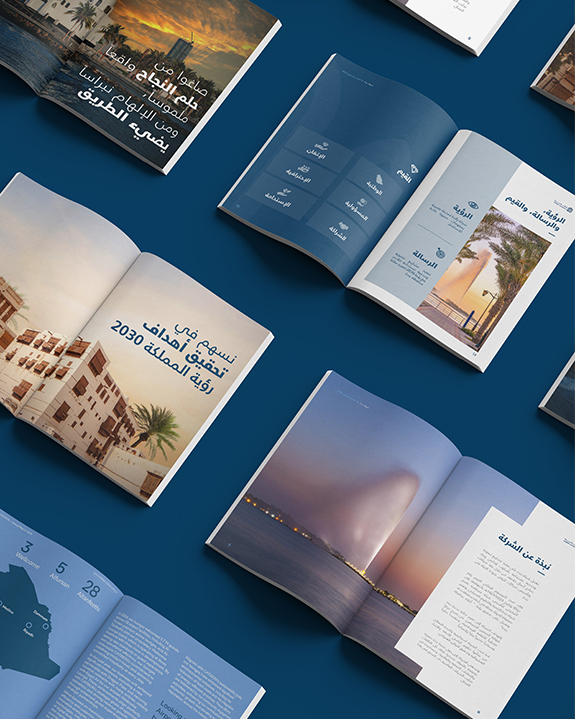
In the Saudi market, Arabic and English parity cannot be treated as an administrative localization step at the end of a project. When a branding agency brief in Saudi Arabia fails to prioritize bilingual design architecture, the selected agency designs an English-first system and then retrofits Arabic characters into the remaining space. This produces asymmetric visual layouts, fractured typography, and compromised user experiences across right-to-left digital products.
Your brief must state that all concepts must be presented with simultaneous bilingual execution. The typographic weights, layout hierarchies, and narrative tones must function as equal components of a singular, integrated operating system.
If you want a bilingual brand system that holds across every channel and every market, start the conversation at wearespark.me/contact.
FAQs
Should we ask agencies to provide creative mock-ups during the RFP stage?
No. Speculative creative work during the pitch phase demonstrates an agency's ability to guess, not their ability to solve complex system problems. Evaluate their technical methodologies, case studies of similar scale, and the strategic depth of their past deployments instead.
How do we balance the expectations of international and local stakeholders in the brief?
The brief must define the core brand system as an infrastructure that accommodates both. The fundamental visual tokens and narrative rules must meet global institutional standards while remaining structurally optimized for regional cultural and compliance nuances.
What is the minimum timeline required for an enterprise branding agency to respond to a comprehensive brief?
An enterprise agency requires three to four weeks to analyze technical constraints, assess competitive landscapes, and formulate a precise methodology. Rushing this window forces agencies to submit generic templates.