logo

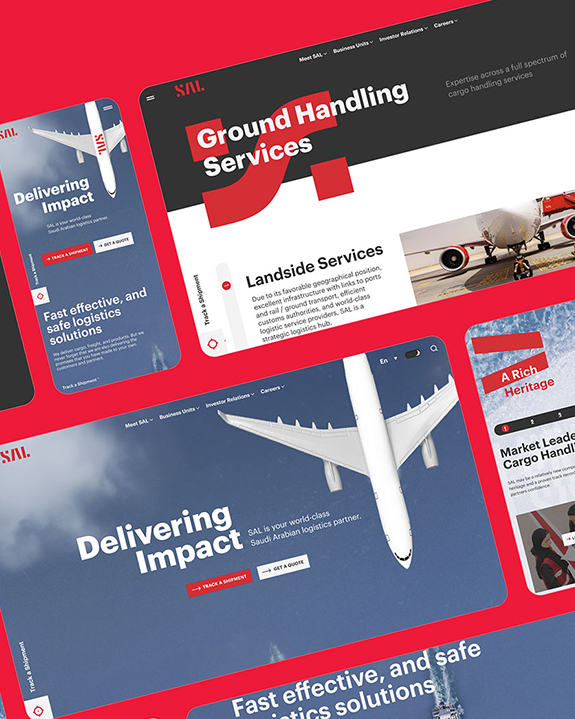
SAL
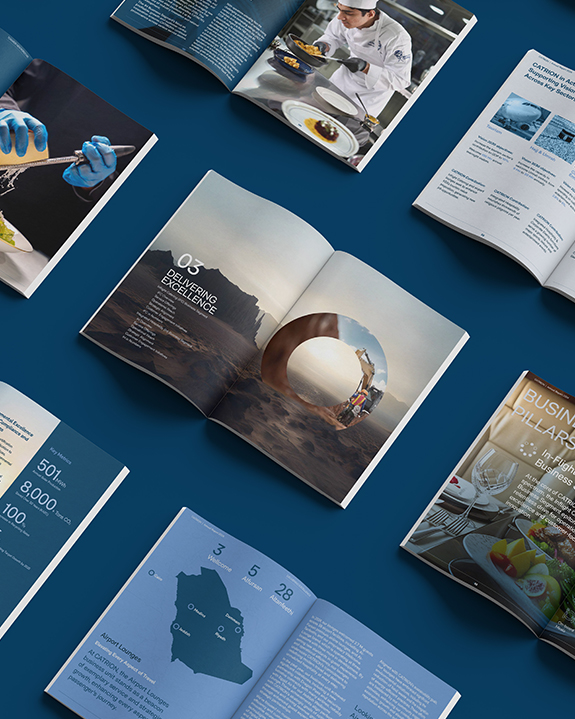
Catrion
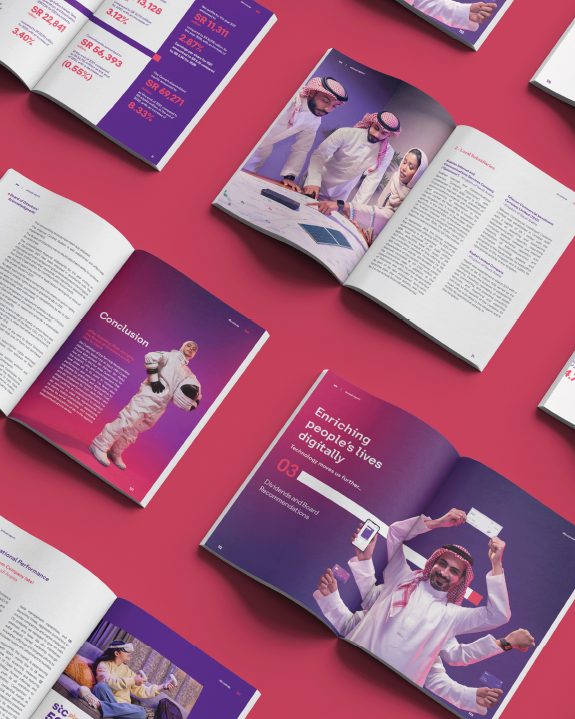
STC
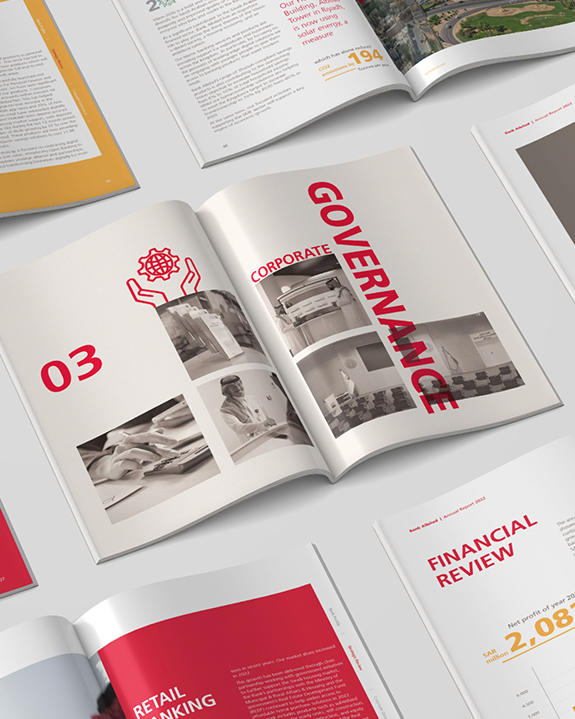
Bank Albilad
One Banking
PIF
SELA
Ma'aden
Riyad Bank
Genalive
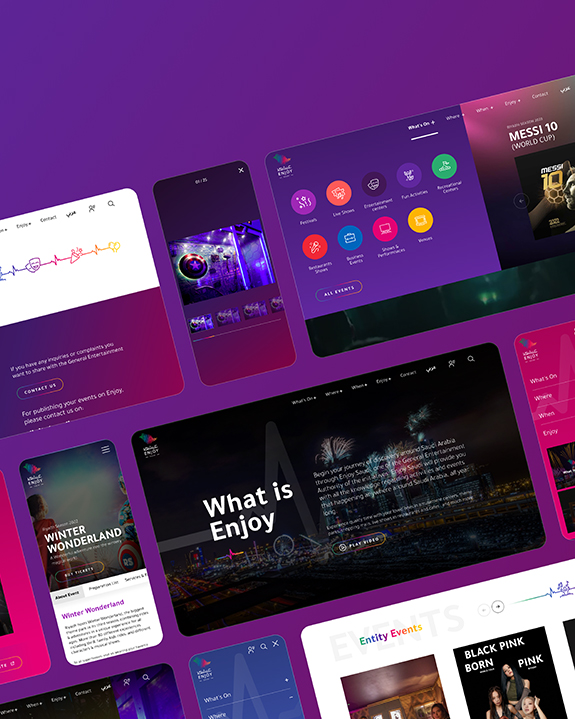
Enjoy
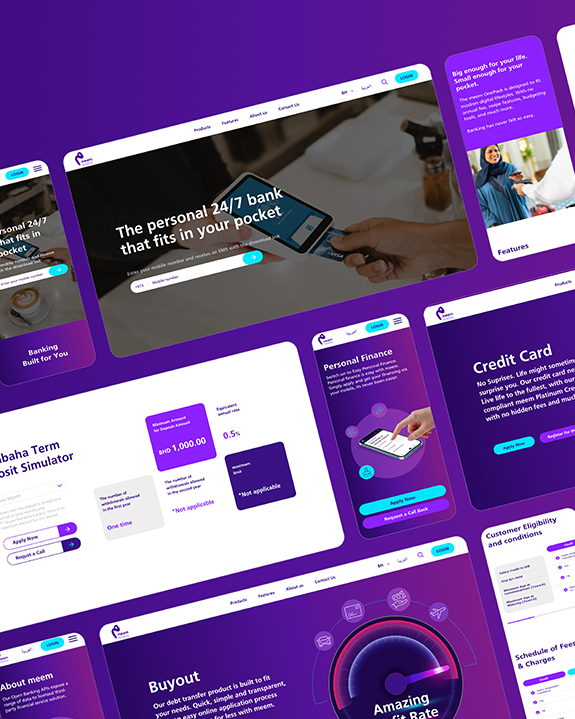
Meem Bank
Project
Project
Project
Project
Project
Project
Project
Project
Project
Project
Project
Project

Start a Conversation

Hi! Click one of our member below to chat on WhatsApp

The State of Investor Communications in Saudi Listed Companies

The 2026 Benchmark

Aamir Shehzad, Founder and CEO, Spark

The Decadal Shift

Ten years since the unveiling of Vision 2030, the Saudi Capital Market has matured into one of the world's top ten largest exchanges by market capitalization.

This quantitative growth has exposed a qualitative experience gap in how listed companies communicate with global institutional capital.

This study benchmarks leading Saudi listed entities in 2026 against the requirements of the 2024 Investment Law and the global IFRS S1 and S2 sustainability standards. While regulatory compliance is at an all-time high, the ability of Saudi firms to articulate long-term value creation has significant room for improvement. The next frontier of Saudi market maturity sits in the professionalization of digital investor operations and narrative-driven transparency. While the floor of transparency has been raised by regulation, the ceiling of excellence is now defined by digital operations and ESG integration.

In June 2026, the Saudi financial landscape bears little resemblance to the retail-driven market of the early 2010s. According to the Ministry of Investment, the institutionalization of the market, once a conceptual goal of Vision 2030, is an established reality. The inclusion of Tadawul in the MSCI and FTSE Emerging Market indices was the catalyst. The implementation of the 2024 Investment Law, issued via Royal Decree M/19, served as the structural cement. This law dismantled the final barriers between domestic and international capital, creating a unified regulatory environment that treats all investors with parity.¹

For listed companies, the law did more than simplify registration. It codified the right of investors to transparent and fair treatment. According to legal analysis by White & Case, the law enhanced the freedom to invest and established a robust framework for dispute resolution, significantly lowering the sovereign risk perceived by global funds.² This legal parity has forced IR departments to stop treating international investors as a separate, secondary audience.

Despite these structural triumphs, a paradox has emerged in 2026. While the Saudi Exchange has the liquidity and the regulatory framework of a developed market, many of its constituent companies still communicate with the cadence and depth of a regional utility. We term this the Experience Gap: the distance between the sophistication of the global investor, who is data-hungry, ESG-conscious, and narrative-driven, and the legacy communication outputs of many Saudi IR departments. The sophisticated institutional buyer expects a level of disclosure that matches the legal protections she now enjoys under Saudi law.

Following Tadawul's inclusion in the MSCI and FTSE Emerging Market indices, institutional ownership has surged. As PwC's Middle East Economy Watch notes, the Kingdom has successfully rebalanced inward, attracting deep pools of global capital that demand high-fidelity data.

Many companies are still suffering from a narrative deficit. They provide the numbers required by the Capital Market Authority but fail to provide the context required by a London-based or New York-based fund manager. These investors are looking for a value creation story that explains how a company's growth links to the broader pillars of Vision 2030, specifically the development of a thriving economy and a global hub.

This benchmark study examines leading listed entities across the energy, banking, and materials sectors to assess how they have adapted. We evaluate them against three primary pillars: Regulatory Integrity (post-2024 Law), Narrative Sophistication, and Digital and ESG Integration. The findings suggest that while Saudi companies are compliant, they are not yet convincing to the degree required to sustain high-multiple valuations in a tightening global liquidity environment.

beyound-img

The ESG Reporting Shift: IFRS S1 and S2

Perhaps the most significant change in investor communications is the move toward mandatory sustainability reporting.

The Saudi Exchange has actively pushed for the adoption of ESG disclosures, moving toward alignment with the International Sustainability Standards Board frameworks, specifically IFRS S1 and S2.

These standards require companies to disclose climate-related risks and opportunities that are financially material. Leading companies have moved beyond CSR brochures, charity and tree-planting initiatives, to disclose the actual financial impact of the energy transition on their balance sheets. As Mustafa Ali highlights, the adoption of these standards is required for firms that want to maintain inclusion in global ESG-tilted funds.

The 2024 Investment Law: A Catalyst for Communication

Before the 2024 Investment Law, foreign investors navigated a complex web of Qualified Foreign Investor rules and disparate licensing requirements managed by the Ministry of Investment.

The 2024 Law simplified this into a single, transparent registration process and codified the right of investors to fair and equal treatment, alongside enhanced dispute resolution mechanisms.

This legal shift had an immediate impact on investor communications. It moved IR from a support function to a strategic necessity. The 2024 Law forced Saudi boards to recognize that transparency is a legal right of the global shareholder, not a discretionary gesture. Consequently, the frequency of non-mandatory disclosures has risen materially compared to 2023.

Increased frequency has not equated to increased quality. Most companies still view disclosures as a checklist rather than a tool for engagement. This compliance-first mindset is the primary inhibitor of what we term Active IR: the proactive shaping of market perception through continuous, high-fidelity communication.

The Narrative Deficit: Beyond the PDF

The most significant finding of our analysis is the narrative deficit.

In the global competition for capital, numbers are the baseline. The story is the differentiator. Global institutional investors do not buy earnings alone. They buy a management team's vision and its ability to navigate a post-oil economy.

Our analysis of 2025 annual reports shows a stark divide. On one hand, visionaries like the Saudi Tadawul Group and Alinma Bank have transitioned to value creation reporting. These reports explicitly link departmental performance to the three pillars of Vision 2030: a vibrant society, a thriving economy, and an ambitious nation. On the other hand, a significant portion of the materials and industrial sectors continue to produce static reports, lengthy text-heavy PDFs that lack a clear strategic thesis.

The institutional buyer is looking for evidence of strategic resilience. In an era of volatile energy prices and regional geopolitical shifts, investors want to know how a company's business model holds up under stress. Few Saudi listed companies provide detailed scenario planning or sensitivity analysis in their public disclosures. This lack of depth contributes to a risk premium that continues to weigh on the valuations of otherwise high-performing Saudi firms.

A London fund manager forms her verdict on a Saudi company in the first three minutes on its IR portal. Most IR portals were not designed with that in mind.

The ESG Inflection

By 2026, the debate over whether ESG matters in the Saudi context has been settled. ESG disclosure is a mandatory requirement for any firm seeking inclusion in global ESG-tilted funds.

The Saudi Exchange's 2021 ESG Disclosure Guidelines laid the groundwork. The 2026 reality is driven by the adoption of ISSB frameworks IFRS S1 and S2, which require companies to disclose how climate-related risks and opportunities affect their financial position, performance, and cash flows.

Our benchmark findings across the three ESG dimensions are polarized:

Dimension Where Saudi stands in 2026 Spark Observation

Environmental (E)

Weakest

Saudi Aramco and Ma'aden have made strides in disclosing their path to Net Zero. Many mid-cap listed companies still struggle to calculate Scope 3 emissions. With carbon taxes and border adjustment mechanisms such as the EU's CBAM operational, this gap is a mounting financial risk

Social (S)

Strongest

Driven by Saudization and women's workforce participation, firms like stc and Almarai provide world-class data on human capital development.

Governance (G)

Maturing

Independent directors now chair Audit and Risk committees at the majority of top-twenty firms, a significant shift from family-led boards of the previous decade.

We have identified a greenwashing risk among the sampled companies, where sustainability is treated as a marketing theme focused on tree-planting or charitable donations rather than as fundamental integration of climate risk into the balance sheet.

Digital Operations: The New IR Frontier

One of the most profound shifts identified in our 2026 research is the transition from Investor Relations as a department to Investor Operations as a digital system.

A website is a conversion hub for institutional trust, not a static brochure.

The 2026 leaders have abandoned the once-a-year PDF model. They have invested in IR Platforms: interactive, API-driven portals that allow investors to pull raw data directly into their Bloomberg terminals or proprietary Excel models. Companies with interactive IR portals experience higher time-on-site from institutional IP addresses than those with static pages.

The role of the Digital Operations and Marketing head has become central to the IR function. IR in 2026 extends beyond the Chief Financial Officer's domain. It requires the ability to manage a digital hub that distributes content across LinkedIn, X, and specialized investor platforms. As research into digital corporate governance suggests, the delivery mechanism of information now impacts market sentiment as much as the information itself.

Companies that have failed to modernize their digital presence are effectively invisible to the passive investor. In a market where algorithmic trading and AI-driven sentiment analysis account for a significant portion of daily volume on Tadawul, the lack of machine-readable data is a competitive disadvantage.

AI and Predictive Disclosure: The 2027 Horizon

Looking toward 2027, this study identifies the early adopters of AI-enhanced investor relations.

These firms are using generative artificial intelligence to automate the first drafts of their regulatory filings, ensuring consistency across hundreds of pages of documentation. More importantly, they are using AI for sentiment feedback loops, analyzing the questions asked during quarterly calls to predict the market's concerns before they manifest in a stock sell-off.

This technological leap brings new challenges. There is a growing concern among institutional investors regarding synthetic investor relations: communications that feel overly polished by AI but lack human authenticity. The most successful firms in 2026 use AI for the heavy lifting of data processing while retaining a human in the loop for the strategic narrative.

The Mid-Cap Struggle

While the Blue Chips of the Saudi market, the top ten firms, operate at a global standard, a widening communication chasm separates the large-cap and mid-cap sectors.

Many mid-cap companies, particularly in retail and healthcare, have seen their price-to-earnings ratios stagnate.

Our analysis suggests this is not due to poor financial performance. It is due to information asymmetry. These firms often lack a dedicated IR officer, with the function bolted onto the CFO's already overstretched office. Without a clear equity story or a modern digital presence, these companies are being overlooked by the very institutional funds that the 2024 Investment Law was designed to attract.

The Persona Paradox

A persona paradox has emerged across institutional engagement.

Investors have more legal protection than ever, thanks to the 2024 Investment Law, but feel less informed because of the sheer volume of low-utility data they must process.

In the pre-2024 era, the institutional investor spent the majority of their time navigating regulatory hurdles and licensing. In 2026, those hurdles are gone, but the same time is now spent filtering through 300-page annual reports that offer no clear strategic alpha. Institutional user behavior on IR portals is consistent across the GCC. Patterns across listed companies suggest that the institutional investor decides whether to engage with a firm within the first three minutes of landing on their digital hub. If the Thinking section is non-existent or the ESG data is not machine-readable, the investor moves on, regardless of the company's P/E ratio.

This shift in behavior represents a move from search cost to analysis cost. The 2024 Investment Law solved the search cost by making Saudi Arabia an open, transparent global hub. The private sector has yet to solve the analysis cost. The visionaries in our study have realized that Investor Relations is a curation discipline, not a release discipline.

The rise of the Digital Operations lead as the gatekeeper of this intelligence marks a meaningful shift in business models. In the most successful Saudi firms, the IR office and the Digital Operations team have merged into a single Investor Experience unit. This unit treats the investor journey like a high-end SaaS experience. They provide health checks on their own transparency metrics and use CRM systems to track which institutional buyers are engaging with which strategic themes.

This level of digital sophistication creates institutional stickiness. When a global fund manager from London or New York sees a Saudi firm providing IFRS S2 climate-risk sensitivity analysis alongside a clear, CEO-led narrative on LinkedIn, the risk premium associated with emerging markets begins to evaporate. In the modern Saudi market, the growth engine of a stock is increasingly defined by the quality of the digital ecosystem that surrounds its dividend yield.

The persona paradox ultimately suggests that the more transparent the market becomes, the more valuable the human-in-the-loop narrative becomes. Investors are not looking for more data. They are looking for a reason to trust the data they already have. For Saudi listed companies, the 2024 Law provided the skeleton of trust. Their digital and narrative strategies must now provide the sou

GCC Reality Check

The patterns above apply across the wider region, with one regional dimension that often gets missed by global IR consultants advising on Saudi mandates.

Bilingual parity in IR disclosures is a strategic question, not a translation exercise. Major regional family offices and sovereign-adjacent allocators read the Arabic disclosures first. When the Arabic version of an annual report reads as a translated afterthought of the English version, it signals that the company does not consider its regional capital base as important as its international one. That signal compounds in the wrong direction over time.

Vision 2030 has shifted the institutional landscape in specific ways that matter for IR teams:

Capital Market Authority and PDPL requirements have moved from optional to operational

The Public Investment Fund's role as a long-term institutional anchor has changed how listed companies model their shareholder base

The IFRS S1 and S2 adoption timeline in KSA is ahead of many G20 markets, putting Saudi firms in a leadership position they have not yet fully claimed

Dual-listing readiness, particularly on the London Stock Exchange, is becoming a defining choice for ambitious Saudi institutions

The companies that build their IR systems for both Tadawul-listed status and dual-listing optionality are the ones that will define the next decade of Saudi capital market maturity.

Strategic Recommendations: Bridging the Experience Gap

Based on our findings, we propose a three-phase framework for Saudi listed companies to elevate their communications:

Phase 01/

Reframe the Board Question

Boards must stop asking "What is the minimum we must disclose?" and start asking "What does the market need to believe in our ten-year growth story?" This requires a shift from legalistic language to founder-led strategic narratives.

Phase 02/

Embed ESG in the Financial Narrative

Treat ESG as a balance sheet discipline, not as a side-car. Every Saudi firm should be able to articulate how the Kingdom's energy transition is a tailwind for their specific business model, not just a macro ris

Phase 03/

Build a Digital IR Infrastructure

Investor Relations is a content and data business. Firms must invest in an Investor Experience that is mobile-first, machine-readable, and continuously updated. The era of the IR section as a buried tab on a corporate website has ended

The Race to Quality

The state of investor communications in Saudi Arabia in 2026 is a story of regulatory success meeting cultural evolution.

Many mid-cap companies, particularly in retail and healthcare, have seen their price-to-earnings ratios stagnate.

Our analysis suggests this is not due to poor financial performance. It is due to information asymmetry. These firms often lack a dedicated IR officer, with the function bolted onto the CFO's already overstretched office. Without a clear equity story or a modern digital presence, these companies are being overlooked by the very institutional funds that the 2024 Investment Law was designed to attract.

DO NEVER DO

Cite primary data and link every claim to a specific source

Publish statistics in an annual report without attribution

Design IR communications in Arabic and English from the first brief

Translate the English IR materials into Arabic at the end of the production cycle

Design IR communications in Arabic and English from the first brief

Translate the English IR materials into Arabic at the end of the production cycle

Design IR communications in Arabic and English from the first brief

Translate the English IR materials into Arabic at the end of the production cycle

Design IR communications in Arabic and English from the first brief

Translate the English IR materials into Arabic at the end of the production cycle

Design IR communications in Arabic and English from the first brief

Translate the English IR materials into Arabic at the end of the production cycle

Cite primary data and link every claim to a specific source

Publish statistics in an annual report without attribution

Frequently Asked Questions

What does it cost to build an institutional-grade IR function in 2026?

The cost is operational, not capital. The investment is in roles, systems, and institutional memory rather than in one-off reports. The most expensive choice is not investing at all, because that gap compounds in the form of a permanent valuation discount.

How long does it take for an IR transformation to show in valuation?

Our observation across Saudi listed companies is that meaningful changes in institutional engagement begin within two reporting cycles. A complete narrative repositioning typically requires three years before it is fully priced in.

Should mid-caps prioritize the same disclosures as large-caps?

Mid-caps face a different version of the same problem. Large-caps need to defend their valuation premium. Mid-caps need to earn institutional attention in the first place. The disclosure standards converge. The communication priorities differ.

Footnotes

1

Saudi Ministry of Investment (MISA), The Investment Law (issued by Royal Decree No. M/19) (Riyadh: MISA, 2024).

2

Waad Alkurini, Anwaar Alshammari, Reem Albakr, Saudi Arabia New Investment Law, White & Case (2024).

3

PwC Middle East, Middle East Economy Watch: Rebalancing Inward (Dubai: PwC, 2026).

4

Global Sustainable Investment Alliance (GSIA), 2024 Global Sustainable Investment Review (London: GSIA, 2025).

5

Mustafa Ali, ESG Reporting in Saudi Arabia: Preparing for IFRS S1 & S2 Adoption (Riyadh: Grant Thornton Saudi Arabia, 2024).

6

Saudi Tadawul Group, 2025 Integrated Annual Report: Connecting the World (Riyadh: Tadawul, 2026).

7

IFRS Foundation, IFRS S1 General Requirements for Disclosure of Sustainability-related Financial Information (London: IFRS Foundation, 2023).

All operational observations and benchmark findings referenced in this paper are drawn from Spark's 2026 benchmark analysis of leading Saudi listed companies' investor relations operations across the energy, banking, and materials sectors. Detailed methodology available on request.

Related Articles

Deep dives into what matters