logo

Start a Conversation

Hi! Click one of our member below to chat on WhatsApp

Vision 2030 and the investor narrative:

how Saudi companies are telling their transformation story

There is a conversation happening in boardrooms and IR functions across Saudi Arabia that did not exist five years ago. It is not about whether Vision 2030 is relevant to the company. Every serious investor already assumes it is. The question now is whether the company can explain, precisely and credibly, how.

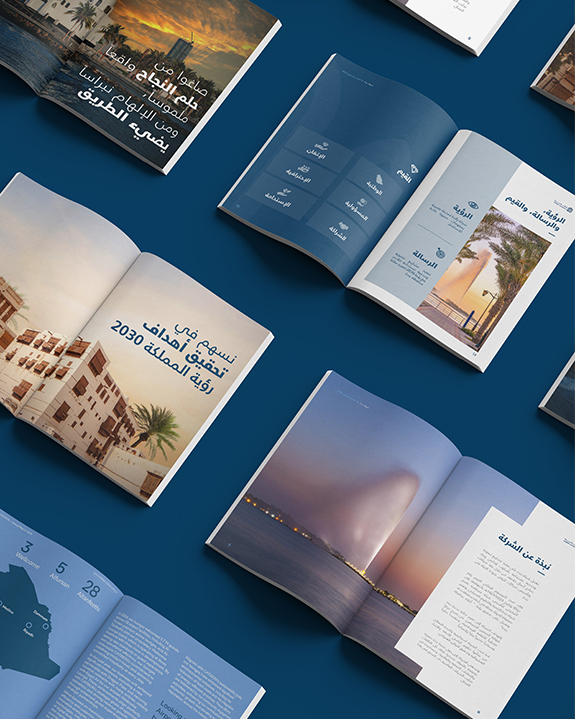
That is a harder brief than it sounds. Vision 2030 is a national transformation agenda of genuine scale, covering economic diversification, private sector growth, social development, and sustainability. The companies that simply reference it by name in their annual reports and investor materials are not telling an investor anything useful. The companies that can connect their own performance data, their strategic choices, and their forward commitments to specific Vision 2030 pillars are telling a story that international investors, in particular, are actively looking for.

Why the macro context matters more now

Saudi Arabia's inclusion in major global indices, MSCI and FTSE among them, has brought a new class of institutional investor into the market. These are not investors who have been following Saudi listed companies for decades. Many of them are orienting to the market for the first time, and they are doing so through the lens of the national transformation story as much as through individual company fundamentals. 

For an investor trying to understand exposure to Saudi equities, Vision 2030 is the frame. The question they are asking is not just what does this company do, but where does it sit in the transformation, is it a beneficiary, a driver, or a company that has not yet worked out its relationship to the agenda. 

Companies that can answer that question clearly, with evidence rather than aspiration, are far better positioned in those investor conversations than companies leaving the answer implicit. 

What good looks like

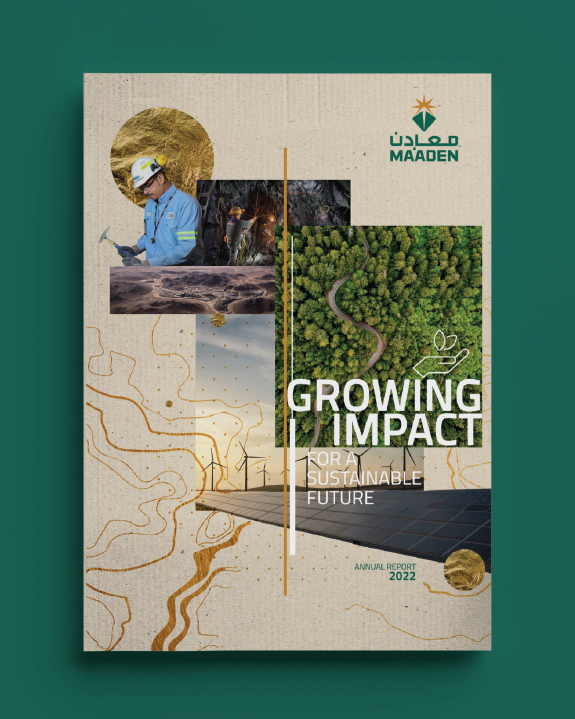
Working with entities at the centreof the Vision 2030 transformation, including companies in sectors such as mining, infrastructure, financial services, and sovereign-linked development, the approach that lands best with institutional investors is one that does three specific things.  

It connects company performance to national metrics, not just sector benchmarks. If the Vision 2030 target is 50% renewable energy by 2030, what is the company's specific contribution to that trajectory, and what does that mean for its own cost base, its procurement relationships, and its capital expenditure over the next three years?  

It is honest about where the transformation is creating headwinds, not just tailwinds. The companies that earn the most credibility with sophisticated investors are not the ones that only describe the opportunity. They are the ones that also acknowledge the execution complexity, the capability gaps being addressed, and the timeline risks being managed.  

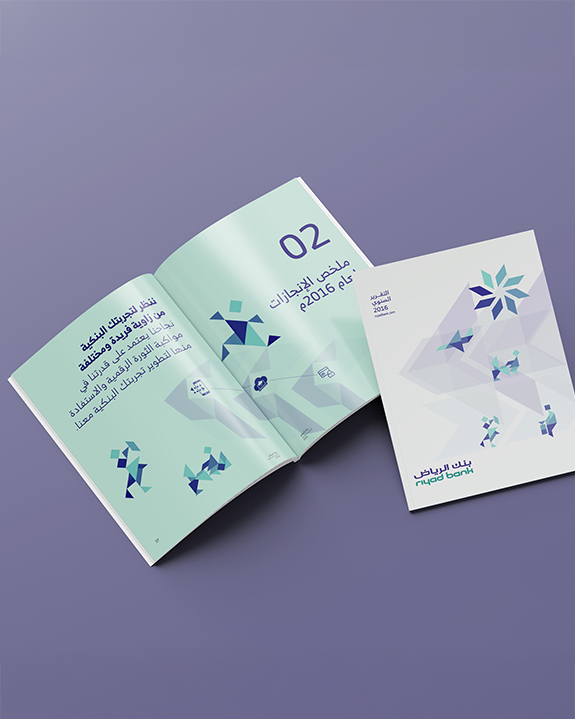
It uses the annual report and investor materials as a connected system, not a set of parallel documents. The Vision 2030 narrative should not live only in the chairman's statement. It should run through the strategy section, the financial commentary, the ESG disclosures, and the risk framework as a coherent thread.  

The opportunity most companies are leaving on the table

Most investor materials produced by KSA-listed companies reference Vision 2030. Very few make the connection between the national agenda and the company's specific performance, investment decisions, and strategic choices in a way that is detailed enough to be useful to a foreign institutional investor trying to build a position. 

That gap is a communication opportunity. The companies that close it are not just telling a better story. They are giving investors the analytical scaffolding they need to build confidence in the company's direction, which is ultimately what investor relations is for. 

FAQs

What do international investors look for in Saudi Vision 2030 narratives?

Investors seek "analytical scaffolding" concrete evidence of how a company is a beneficiary or driver of specific transformation pillars, rather than generic aspirational language.

Why is 'honesty about headwinds' important for KSA companies?

Acknowledging execution complexity and capability gaps builds credibility with sophisticated investors who value risk management and realistic timelines over purely optimistic projections.

How can Saudi listed companies improve their IR communication?

By treating the annual report as a connected system where the transformation narrative flows seamlessly through strategy, financial commentary, and ESG disclosures.

What role does performance data play in Vision 2030 alignment?

Data serves as the proof point. For instance, if a company targets renewable energy, it must detail the impact on its cost base and procurement to be credible to institutional analysts.

How is the 'macro context' changing for Saudi boardrooms?

The entry of global index-tracking funds means boardrooms must now explain their role in the national agenda to an audience that is often evaluating the KSA market for the first time.